by Annie | Sep 27, 2011 | Education, Illustration Station
My memories of elementary and middle school are littered with instances of kids being scolded for doodling in class. By high school, most had learned to resist doodling in front of the teacher or had just gotten better at hiding it. Even though I’d heard bits and pieces here and there about the benefits of doodling in helping with focus and information processing, as a teacher, I still felt compelled to frown upon doodling in my classroom. After all, every teacher I’d ever had discouraged doodling. Even now, when I see people doodling in class or during meetings, my first thought is, “Geez, why can’t that person just pay attention?” But when I stop to think about my own doodling habits, I find that I tend to doodle when I’m trying to concentrate. I almost always doodle when I’m on the phone, especially during those oh-so-lovely phone interviews. Though many are quick to dismiss doodling as a mindless pastime, research finds that doodling actually aids in processing complex information. So if you’re a closet doodler or have ever looked down on someone for doodling during a meeting, take a...
by Annie | Jul 13, 2010 | Game Design
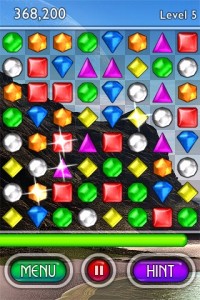
I’ve recently rediscovered my insatiable love for Bejeweled 2. For those of you who have never played, the gameplay is quite simple. Given a grid of random jewels, you must switch adjacent jewels to create strings of 3 or more. Bonus events occur when you get 4 or 5 gems in a row. Pretty simple. Not rocket science. So why has the game been played and replayed hundreds of millions of times? What keeps people coming back to such a straightforward game? The answer lies in the psychology behind the game. While the gameplay may seem simple, the psychology behind it certainly isn’t. Here’s why: 1. Difficulty level Bejeweled may not require a PhD in pattern finding, but there is some level of skill required for the game. You have to practice in order to increase your skill in finding rows of jewels. With a learning curve in place, the player gets a sense of contributing to and earning the rewards, making them all that much more gratifying. 2. Randomness and unpredicability Sure you can control which jewels to move, but you have no power over the placement of the gems in the grid. The jewels appear in a random pattern, so gameplay is new and different each time you play. Because of this, you can’t predict the outcomes. This keeps you constantly guessing as your dopamine neurons are jumping up and down in elation, quite similar to the effect gambling has on your brain. 3. Cascading effects At certain points in the game, you might create a simple string of 3 jewels that sets off huge cascading effects,...
