by Annie | Jul 13, 2011 | Psychology of Games
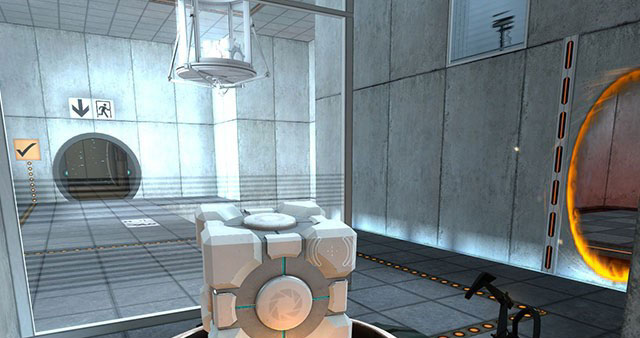
Wow, look at you reading my blog. And here I didn’t even know you could read. I guess that big head of yours is good for something after all. Or maybe not. As it turns out, trash-talking is almost as important to our enjoyment of social network games as the core gameplay. As counterintuitive as it may sound, research has found that teasing each other is one of the fastest and most effective ways to build and intensify positive feelings for each other. Remember all those times you spent teasing your friends on the playground back in the day? You were just secretly trying to become more popular. What a sad little life you lead. The psychology of teasing was especially pertinent as I played through the Portal games recently. (Yes, I know. I’m a bit late to the party.) The more GLaDOS trash-talked me, the more determined I became and the more I wanted to keep playing. I would try as hard as I could to solve the puzzles, then I’d get a monotone statement like, “Remember before when I was talking about smelly garbage standing around being useless? That was a metaphor. I was actually talking about you. And I’m sorry. You didn’t react at the time so I was worried it sailed right over your head. That’s why I had to call you garbage a second time just now.” Admit it. You love it. So as you’re designing games, especially social games, keep in mind the psychology of teasing and what it could add to your game. Of course, having a great writer like Erik Wolpaw on...

by Annie | Apr 28, 2011 | Game Design
The more I get into game design, the more pleasantly surprised I am at how much psychology is involved. If you think about it, game designers shape experiences, so they must constantly dig into their toolbox of psychological principles. If you’ve ever played a game and striven to attain any of its achievements (think Angry Birds), the game designers have hooked you in with psychology. Achievements, like visual feedback, audio, and various missions and challenges, play a huge part in the perceived fun and replayability of a game by motivating players. To learn more, take a look at this article on how to design effective game achievements: The Cake Is Not a Lie: How to Design Effective...
by Annie | Nov 5, 2010 | Game Design
How does virtuality differ from reality? In reality, we may or may not remember everything that happens. In the virtual world, we can track, record, and measure every single action, choice, and event and thus reward players appropriately to effectively manipulate future actions, choices, and events. In his TED talk, Tom Chatfield outlines 7 ways games engage the brain, which can be applied to every field from education to the business world. Take a...
by Annie | Sep 1, 2010 | Game Design
Solid game design rests on a thorough grasp of psychology. If we can start to understand what motivates us in real life, we can create games that motivate us, and vice versa. Combine game motivation and real life motivation, and you’ll get some really motivated people. Take a...
