by Annie | Aug 30, 2010 | Game Design
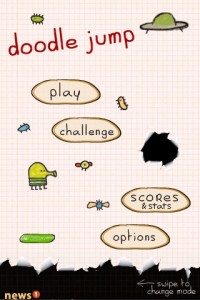
It seems that I’m a bit late to the Doodle Jump boat, but I’m no less addicted. Like the millions of Doodle Jump fans around the world, I’ve logged countless hours guiding Doodle up an endless path of platforms, dodging alien monsters and hoping for boosts from rockets and propeller hats. Doodle Jump advertises itself as “Doodle Jump – BE WARNED: Insanely Addictive!” and does not fail to deliver. But why? How can something so simple be so addicting to so many people? For those of you who aren’t familiar with Doodle Jump, it’s a platform game created by Lima Sky that was released worldwide in April of 2009. By June of 2010, the game had already sold over 5 million copies, continuing to generate nearly 30,000 downloads a day. At this point, you might be thinking that the game must be epic. Dozens of levels, tons of tough enemies, tricky puzzles, customization galore. But you’d be wrong. Gameplay consists of guiding a green four-legged creature up an endless array of platforms without falling. The higher Doodle gets, the higher your score. That’s it. So back to my original question. Why is that fun? And more importantly, why is that repeatedly fun? Such a simple and repetitive action could get boring fast, but this game is different. There seem to be a lot of hidden factors that make Doodle Jump the runaway success that it is. Here are my takes on why the game is so fun: 1. Doodle Jump is easy to learn. Learning how to play Doodle Jump takes less than 5 seconds. Doodle’s movement up the...
by Annie | Jul 22, 2010 | Game Design
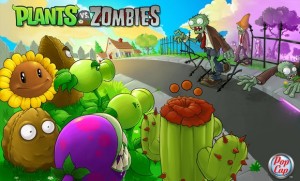
Like vampires, zombies have mystified the masses for ages. But who knew that you could fight off zombies with pea-shooters, mushrooms, and other veggies? Plants vs. Zombies, released in 2009 by PopCap Games, has been a huge hit for casual and hardcore gamers alike. Even my mom loves it, laughing in delight as the zombies’ heads pop off. But why? What contributes to the game’s broad appeal? Here are a few conjectures: 1. Approachable theme Enhanced by well-polished graphics, the theme of the game is approachable by audiences of various ages and backgrounds. Using veggies as weapons provides a new twist for hardcore gamers and a familiar topic for younger audiences. 2. Simple mechanics A tower defense-style game of sorts, Plants vs. Zombies doesn’t require players to manipulate a variety of buttons to engage in actual combat with the zombies. Instead, players choose strategic placements for their plants with the click of a button, watching the battlefield from above and reinforcing their defenses when necessary. 3. Universal concept Everyone is familiar with the exchange of money and goods. Even toddlers understand that people must acquire money, then choose how and when to spend it. Preying on this universal concept, Plants vs. Zombies provides a new medium with which to earn and spend currency. Players must earn sun power to plant more veggies in order to defend their house from zombies. And who wouldn’t want to do that? So if you haven’t already, you should definitely consider taking on the role of veggie commander, defending your house and brains against the approaching wrath and hunger of the zombie...
